Finding Joy

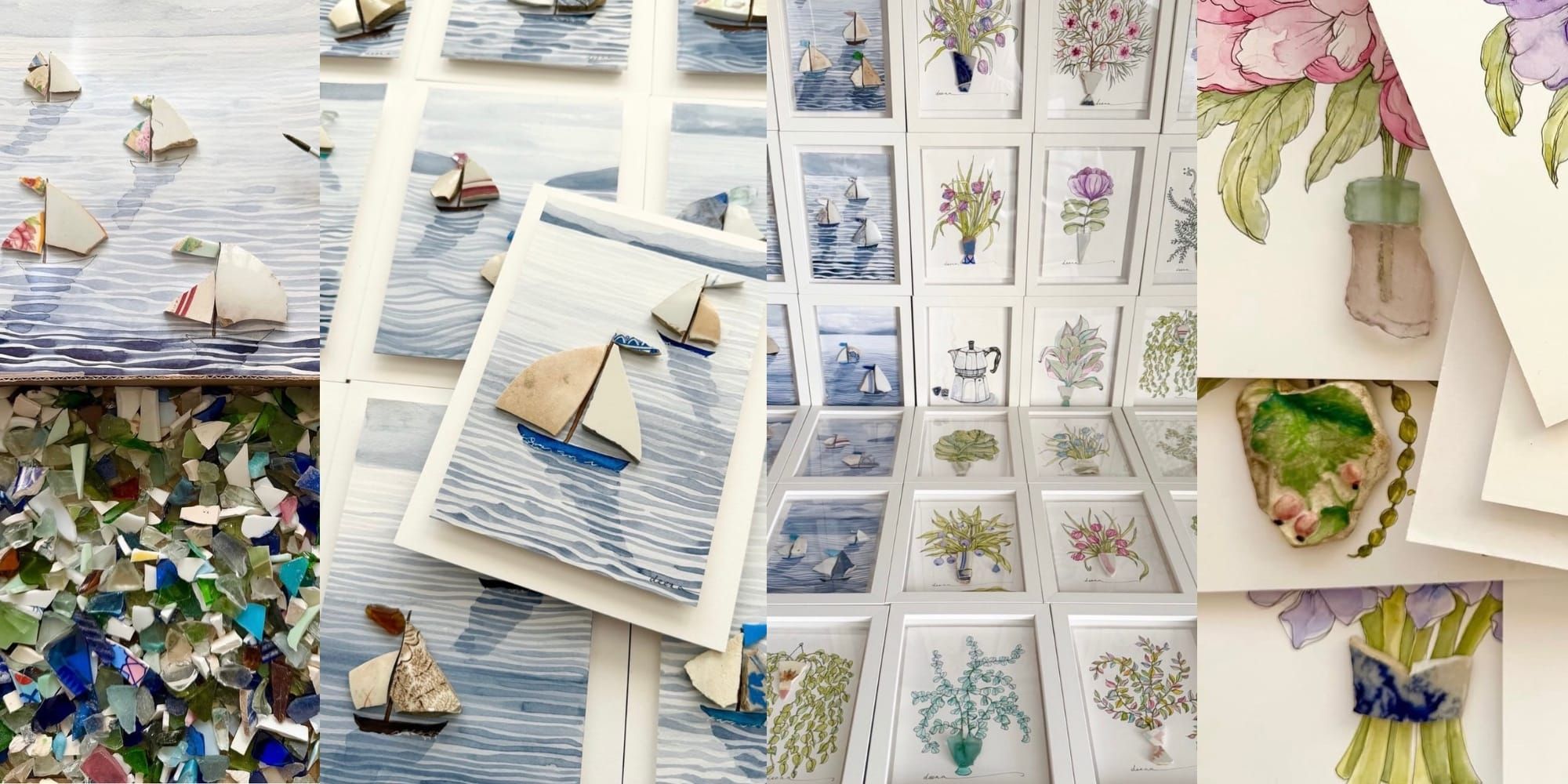
For years, Deena picked up broken things. Fragments of glass and pieces of vintage china lay scattered through the local parks she walked through, objects that most people would have passed without a second thought. Deena noticed them, picked them up and took them home.
These walks came during a period of her life shaped by caring for someone very close to her who was living with severe mental illness. After countless visits to the psychiatric ward, the parks became what Deena describes as her “calm sanctuary”. When she began noticing shards of glass and old china buried within them, she felt compelled to collect them.
At the time, she didn't entirely understand why. She simply knew that she didn't want to leave them behind as long-buried rubbish. As a lifelong artist, she trusted that perhaps one day she would understand why these fragments had caught her attention and what she was supposed to do with them.
Eventually, she did.
The pieces began appearing within her artwork. What had once been discarded glass or forgotten china became part of something new. The fragments were not repaired or disguised. Their imperfections remained visible, incorporated into the work as pieces carrying their own history.
It was an early customer who unknowingly captured something at the heart of what Deena was creating. Looking at the work, she told her, “Sometimes life may feel broken but still be beautiful.”
The customer could not have known how deeply those words would resonate.
Behind the work was Deena's mother, Joy. She had died before she was able to see the artworks that would eventually carry her name. Deena writes that she knows her mother would have been happy to see that, after such intense darkness, light eventually came.
The series became Finding Joy.
There is something especially poignant about that title because it carries more than one meaning. There is Joy, Deena's mother and the person whose story sits at the heart of the work. Then there is the idea of finding joy itself. Deena spent years finding fragments during quiet walks without knowing where they would lead her. In time, she found a purpose for objects that had been discarded and a way for an intensely personal chapter of her life to exist through her art.
Look closely at the finished works and those fragments remain visible. They have not been returned to what they once were. Instead, they have become part of something else, their history still present within the finished piece. It gives the customer's observation about brokenness and beauty an added significance. The work does not require the broken pieces to stop being broken before they can belong.
For Deena, Finding Joy is ultimately a tribute to her mother. But its meaning extends beyond their story. She dedicates the series to those who suffer from invisible illnesses and to the many people who care for them, acknowledging an experience that can so often take place beyond public view.
Perhaps that is what makes the story behind Finding Joy as significant as the finished artwork itself. What began with an artist walking through a park and noticing something that others might have overlooked became a collection carrying decades of experience, memory and connection.
Deena once picked up those fragments without knowing why. Now they carry Joy with them.
You can discover more of Deena’s work through The Tiny Inkling Studio, or find her in person at markets around Sydney.